Trump’s Exclusion from Social Media Presents A Significant Point in American History
In the most troubling period in American history, Twitters scored a fundamental role in social media when it joined Facebook permanently suspending President Trump’s account. This could feel weird, unusual, and different since there is no historical precedent or media or presidency. Speaking on the GeekWire podcast, Margaret O’Mara, a historian author and University of Washington professor, said that this had not happened before.
O’Mara said that especially in the modern period, what the president says and does has always been covered since it has always been newsworthy. O’Mara, who specializes in the history of tech and politics said that as the presidency grew into becoming the most important job on the planet, and the US becoming a military and economic superpower, what the president said did matter and had credibility. She added that as much as Trump might be a peculiar president, social media platforms have been given a role they were not well designed for. According to O’Mara, they are now becoming political town squares which they were not designed to be; instead, they are designed to sell ads on the internet.
She recalled the early optimism for social media as a tool for democracy and bringing togetherness. O’Mara added that these tools had become a space for organizing violent acts and insurrection, creating an alternate reality seen on the event of the past despite them still being used as a unifying force. According to O’Mara, it is a problem with curated news feeds, often perfect for selling ads. She said that it is an amazing business model and still not a better way to get the full spectrum of what is going on globally.
O’Mara went on to say that American history still offers some hints about what would come next even without direct precedence. She mentioned that the tech sector has grown in an environment of deregulation; however, the history of television and radio in America depicts that there can be a useful role for regulation too.
It is time that we learn our lesson and end racism.
A screenshot of the video that captured the arrest of George Floyd and his death that followed (New York Times)
On May 25, 2020, another case of police brutality struck the news headlines around the world. The victim was an unarmed black man named George Floyd, and the entire incident was recorded by bystanders and security cameras. Floyd suffocated to death at the scene of arrest in front of other citizens.
The police were called by a convenience store employee, who believed that Floyd had purchased cigarettes with a counterfeit bill. Upon arriving on the scene, Officer Derek Chauvin arrested Floyd while pinning him to the ground, knee pressing down on Floyd’s neck. In a matter of minutes, Floyd became unconscious and died. According to the New York Times, his last words were, “I can’t breathe.”
This incident ignited an uproar of anti-racism protests among black communities, and protesters appeared all over the country, carrying placards saying “Black Lives Matter,” a slogan that had been used in many anti-racism activities. The protests began peacefully with protesters of different races gathered together to march and stand in silence. Unfortunately, some local protests have turned into something more violent, as some protestors began to loot and damage many properties from small shops to large department stores.
Wide-spread looting occurs in stores off Broadway as police attempt to clear the Broadway shopping area of protesters and rioters in Santa Monica on Sunday, May 31, 2020 (Daily News)
Such violent, irresponsible, and disrespectful actions have tarnished the true meaning and purpose behind the protests, which were meant to peacefully show the world that what was done to George Floyd and to all other victims of police brutality was wrong. Although peaceful protests were not part of the looting that occurred, many unfortunately associated the Black Lives Movement with the looting and violence that ensued.
The violent side of the BLM protests was very similar to what had happened in 1992 in Los Angeles. In 1992, a series of riots and civil disturbances had occurred in Los Angeles County, often referred to as the 1992 Los Angeles Riots. It was initiated when a video footage of Rodney King, an American-African man, being struck with a taser dozens of times, hit with a side-handled baton, and stomped on by white police officers was released. The incident was very similar to what happened to Floyd.
What we can see here is a repetition of history, and it seems as if we haven’t learned from the past–a very recent past. In order to understand the conflict between the races, we need to fully understand the history behind how racism and discrimination affected our society in the past and is affecting it in the present.
As philosopher George Santayana once said, history repeats itself, and we need to learn from it to avoid making the same mistakes. We have all learned about the history of slavery in school for years. We have been reminded of the wrongfulness of discriminating against people just because their skin color is different. But are we actually learning from history?
We must study and watch the history before our eyes with patience and, when unjust acts take place, we must come together to remind everyone that discrimination and racism of any form cannot be justified.
Artist Akse works on a mural of George Floyd who died in police custody in Minneapolis (Al Jazeera)
While we are living in a volatile world, one thing remains consistent: the increasing demand for people’s voices to be heard. Following the Floyd incident, many have spoken out against the officers who have arrested him. The outcry of voices has ultimately led Officer Chauvin to be charged with second-degree murder and second-degree manslaughter in addition to being dismissed as a police officer. Furthermore, a new legislation that would combat the racial biases present in the current criminal justice system was introduced in the American government. Our battle for justice and fairness may be long and difficult, but so was every other battle for justice the world has seen. It is our duty to stay strong to remain strong and united in our thoughts and actions so as to ensure that everyone’s voice has been heard and that no one lives with the constant fear of being discriminated against
Brown, Rachel. “LA Task Force Seeks to Arrest Looters, Vandals Who Hit Stores during George Floyd Protests.” ABC News, 29 June 2020, abc7.com/los-angeles-protests-lapd-la-safe-task-force-george-floyd/6280666/.
Hill, Evan, et al. “8 Minutes and 46 Seconds: How George Floyd Was Killed in Police Custody.” The New York Times, The New York Times, 1 June 2020, http://www.nytimes.com/2020/05/31/ us/george-floyd-investigation.html.
“Los Angeles Riots.” History.com, A&E Television Networks, 18 Apr. 2017, http://www.history.com/ topics/1990s/the-los-angeles-riots.
Clairmont, Nicholas. “‘Those Who Do Not Learn History Are Doomed To Repeat It.” Really?” Big Think, Big Think, 24 Apr. 2020, bigthink.com/the-proverbial-skeptic/those-who-do-not-learn-history-doomed-to-repeat-it-really.
Socially distancing South Koreans and moving them into the virtual world.
With the emergence of COVID-19 (the coronavirus disease), the world is once again experiencing a new epidemic after the outbreaks of SARS (Severe Acute Respiratory Syndrome) in 2003, Ebola in 2014 to 2015, and MERS (Severe Acute Respiratory Syndrome) in 2012. In just a decade and a half, we have experienced four major epidemics that have in turn shaped us culturally.
The current pandemic was in fact quite expected, but we were definitely not prepared for it. As we’ve seen with the previous emergence of infectious diseases, affected nations were able to develop necessary infrastructures, policies, and procedures to prevent and control the infectious diseases only after the pandemics subdued. Bill Gates explained in his TED Talk, “The next outbreak? We’re not ready,” that we were able to avoid a global outbreak of Ebola in 2014 with the help of many health workers. He further elaborated that what humanity has learned from previous outbreaks is that “a large epidemic would require us to have hundreds of thousands of workers.” The effectiveness of the lesson is quite evident in the case of COVID-19.
According to the WHO (World Health Organization), the coronavirus is a pneumonia of unknown cause, originating from Wuhan, China. It was first reported to the WHO Country Office in China on December 31, 2019, and since then, the WHO has declared a Public Health Emergency of International Concern on Jan. 30, 2020.
World Health Organization logo (WHO)
The impact of COVID-19 is not only limited to the mortality of the world’s population –over 103 million confirmed cases and over 2.24 million deaths globally, according to the Worldometer Coronavirus Update –but also to the way the world is communicating. South Korea provides a good example of how the virtual world is advancing into people’s lives.
From the beginning of the outbreak, the South Korean government has taken an aggressive approach to tackle the epidemic. People who have or may have contracted the coronavirus were vigorously tracked down for detailed epidemiology, while all details of the epidemic have been shared via emergency notifications on mobiles in real-time. In addition, in 2020, the South Korean government had also delayed the beginning of the new academic year, which is in March, by a month in order to prevent the further spread of the coronavirus among students and their families.
In response to the closing down of schools, most international schools have continued to carry out their curriculum via virtual learning, as the online system had been used increasingly over the past few years even before the pandemic. However, most public Korean schools were not equipped with appropriate online systems, not to mention how the majority of the students were not accustomed to checking and submitting assignments or communicating with teachers and friends online. The Korean Ministry of Education, therefore, had no choice but to postpone the beginning of the school year in order to make necessary changes and train teachers on how to effectively utilize online tools to teach their students.
While the schools seem unprepared for the transition into the virtual world, major institutions and companies of various sizes have ordered their employees to work from home to prevent the possible spread of the virus at the workplace.
Workers are working from home to avoid the spread or contraction of the coronavirus (Yonhap News)
Evidently, the emergence of the breakout is shaping our world today. Students are learning from home, teachers are providing their lessons from their home, and workers are working from home. Governments around the world are also tackling international matters from their home countries, too. In the era of virus, as the ABC News presented, even summits have been going virtual. On March 26, 2020, Korean President, Moon Jae-In, participated in the meeting for the Group of 20 nations (G20), which took place online for the first time for about 90 minutes in place of an in-person meeting that usually lasts two days.
South Korean President Moon Jae-in is attending the G-20 virtual summit at the presidential Blue House in Seoul , South Korea (ABC News)
Locally, government officials have been working in shifts in order to effectively keep their social distance, some even working from home. Furthermore, the South Korean government has had several rounds of Emergency Relief Grants that all Korean citizens were able to receive and are still offering financial aid to those in dire situations, such as the unemployed or business owners affected by government restrictions. Currently, it seems like the whole world is paused, with governments urging their people to refrain from participating in activities that involve more than a handful number of people. In South Korea, the governments have placed strict measures, not allowing more than 5 people to gather socially and ordering restaurants and cafes to only allow take-out after 9PM. Online entertainment platforms, especially Netflix, have gathered immense popularity in Korea during the pandemic, and more people are becoming active on social media to share their stories and stay connected with others. While the streets in Seoul are turning quiet, the people are becoming ever so active in the virtual world.
It has been over 70 years since the Korean peninsula has been divided into North and South Korea. As a result of the Korean War, North and South Koreas remain to be the only divided nation in the whole world.
Image Source: Wikipedia
While the war ended and the world seemed to be at peace, there were many people who had been separated from their families across the peninsula. Some families were broken by the 38th line, and other families were divided within the same part of Korea. While we don’t know if those separated within North Korea were able to find their families back, a broadcasting system in South Korea initiated a movement to find and reunite the separated families. Hosted by KBS, the Korean Broadcasting System, the program was called KBS Special Live Broadcast “Finding Dispersed Families”.
Before we dive into the special live broadcast, let’s learn about the history behind the Korean War.
How did the tragedy of dispersed families occur?
Its tragic history dates back to the Japanese colonial period from 1910 to 1945. Under the Japanese imperialism regime, chang-ssi-gae-myeong or renaming Korean people’s surnames into Japanese, were executed in order to annihilate the Korean culture and people.
One of the causes of dispersed families originates from the surrender of Japan in World War II. After the Yalta conference, the 38th line was divided according to military convenience, temporarily divided the nation, and still divides the nation as the South and the North, leaving behind dispersed families. Soon after the nation was divided, the north invaded the south in 1950 and started the Korean war.
In 1953, both sides affirmed their commitment to the ceasefire. Consequently, the Korean War produced about 4 million casualties and 100,000 orphans, and about 10 million separated families on the Korean Peninsula.
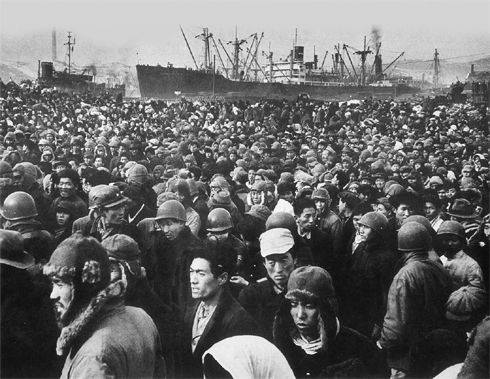
Relatively short-term cause of separation occurred during the evacuation of Hungnam on 15th of December through the 23rd in 1950 and the embarkation of SS Meredith Victory on January 4th, 1951. Many separated families occurred in the process of boarding a boat to Busan.
Also, during the Korean War, orphans or lost kids found by people were sent to orphanages and among them, some were adopted overseas regardless of checking the parent’s status. It is estimated that more than 200,000 people were adopted from the timeframe liberation of Korea in 1945 to after the Korean War in 1958.
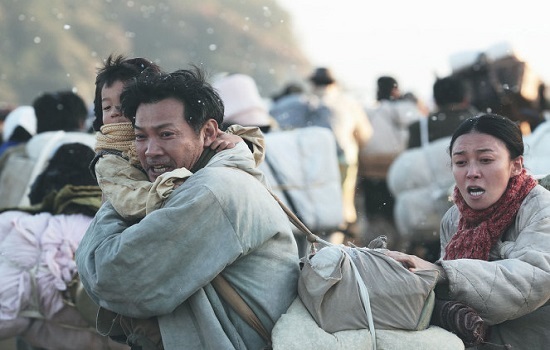
Image: A scene from “Ode to My Father”
The movie “Ode to My Father” illustrates a scene where a younger sister was found through KBS <Special Live Broadcast for Finding Dispersed Families>.
The contentious history of U.S. presidential pardons
According to the New York Times, President Trump is considering to pardon his personal attorney, Rudolph Giuliani, and one of his sons as well as his son-in-law before leaving office in January 2021.
The pardon, exercised by the president dates back to the office itself. However, there’s been controversy over how the chief executive should exercise it since the practice was founded. There have been many cases where controversial figures have been pardoned.
However, there’s still one pardon that has never been exercised: the self-pardon. Can this change?
Alexander Hamilton, in a 1787 Constitutional Convention, proposed that the president be given the privilege to pardon criminals. Most attendants agreed with him and the proposal was passed. Since then, the president can:
Issue a pardon that can eliminate the crime entirely.
Issue a pardon that can shorten or wipe out a criminal sentence.
Issue a pardon that can release someone from a legal obligation.
Finally, he can issue a respite.
Some of the contentious pardons include:
In 1795 the then president, George Washington pardoned two criminals who had organized the 1794 Whiskey Rebellion.
In 1800, another pardon to rebels was exercised, this time by President Thomas Jefferson. He pardoned all convicts that were sentenced for defaming the government. In fact, others such as James Monroe and James Madison did pardon pirates and other offenders.
Other pardons have not been successful. In 1833, President Andrew Jackson pardoned George Wilson, who was found guilty of stealing U.S. mail. George refused the pardon and was executed by hanging.
In 1862, President Abraham Lincoln pardoned 265 convicted Dakota men. Driven by hunger and other violations, their rebellion led to the death of more than 600 white settlers.
And Trump is no exception, as of December 2020, he has gone on to pardon some figures which have led people to term the exercise as controversial.
Here are some of the Black heroes who fought in wars that defined America as we know it.
American Revolution
Thousands of Black Americans fought in the American Revolution war. But unlike the White soldiers, they were not just fighting for independence or for the British to stay. Rather they were fighting to end slavery which was allowed in the colony. Historians estimate that between 5,000 and 8,000 Black soldiers fought on the Patriot side while 20,000 served the Crown.
Civil War
As America’s Civil War raged, with the enslavement of millions of people hanging in the balance, African Americans didn’t just sit on the sidelines. Whether enslaved, escaped, or born free, many sought to get involved in the war.
Most were involved in bloody battles, attending to the wounded soldiers, political maneuvering, espionage, and teaching other soldiers how to read. Others fought courageously to end enslavement in America.
World War I
Most veterans of World War I found it difficult to shed off memories and Horace Pippin is no exception. To tame them, he decided to sketch them inside a series of composition books. He draws using a pencil and crayons. While the grammar is makeshift, the book provides a first-hand account of the harrowing war.
World War II
As the first Black aviators to serve in the U.S. Army Air Corps, the Tuskegee Airmen broke through a massive segregation barrier in the American military. Their success in fighting the German Army in the skies over Europe demystified the notion that African Americans didn’t have the capabilities to take part in combat operations.
The Meaning Behind Juneteenth Celebration in the US
Juneteenth, the annual holiday recognizing the end of slavery, has so far gained visibility during the protests of police violence and the Black Lives Matter movement. As the nation challenges racial injustice issues, the annual Juneteenth commemoration of the end of slavery added more significance.
This year’s celebration comes at a time of civil unrest started by the high-profile deaths of George Floyd and other African Americans at the police’s hands. This would lead to increased tensions and increased visibility of the holiday.
To understand Juneteenth, it is the combination of the words June and 19th, a holiday meant to commemorate the end of slavery in the United States. Its date is tied to a speech talking to the formerly enslaved black people of Texas that the Civil War was over and that they were then free. The speech was given by a Union general in Galveston, Texas in 1865. In his “General Order No. 3,” Maj. Gen. Gordon Granger declared that, with Texas being under Union Control, all slaves are free in the state, owing to the Emancipation Proclamation issued by President Abraham Lincoln more than two years later.
However, the order did not end slavery overnight in Texas, similar to how Lincoln’s earlier proclamation had not stopped its practice in other Confederate states. However, the formerly enslaved people of Texas, especially in the area around Galveston, started to celebrate Juneteenth as the day of slavery’s halt a few years later.
Also known as Freedom Day, Cel-Liberation Day, and Jubliee Day, parades are often celebrated in public ceremonies though the celebrations differ from place to place. However, according to Minkah Malakani, an assistant professor of African and African diaspora studies at the University of Texas at Austin, Juneteenth does not only celebrate one day in history. Malakani said that it has always meant more than celebrating ‘We are free and equal to you’; it is having always been combined with “We are free and now we want freedom to mean something beyond what you think it means.”
As we enter the third quarter of the year, everyone’s awaiting a breakthrough in the development of vaccines for the notorious COVID-19. In general, new drugs and vaccines must undergo a lengthy review process prior to regulatory approval in order to make sure that the drugs or vaccines are effective and not harmful to the patients. However, it is likely that vaccines for COVID-19 to be developed and released under emergency use authorization protocols, considering the urgency of the situation. However, considering the efforts of many countries to develop the vaccine for the last year, it is unlikely to receive any vaccines any time soon. Experts in the field believe that we’ll have to live with the coronavirus and get vaccinations, when available, every year as we do for the influenza virus.
While immunization or vaccination has a long history, the actual development and application of vaccines date back to the late 18th century with Edward Jenner. Dr. Jenner developed the first smallpox vaccine in 1798, and the vaccines were culminated for the global eradication, developing into a systematic implementation of vaccines. In 19th century, the vaccines for the cholera and anthrax were also developed and distributed around the world.
By the 20th century, vaccines were developed for many infectious and/or pandemic diseases, and this was achieved along with the advancement in the methodology as well. This was when the viral tissue culture methods were developed between 1950 and 1985. What is interesting about the development of vaccines is that it often accompanies advancement in methodology as well as medicinal capability around the world.
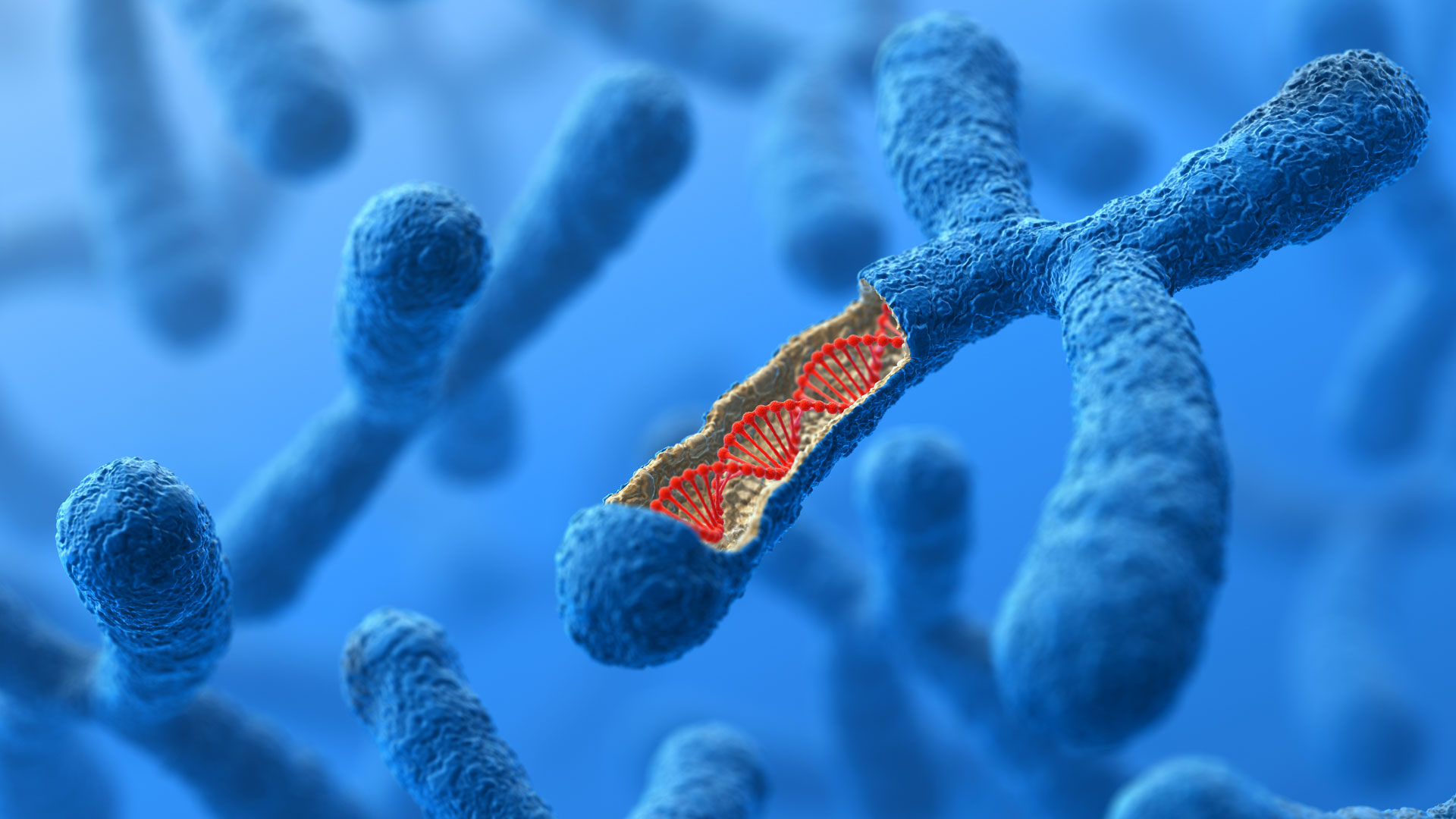
The 20th and 21st centuries are marked by the emergence of molecular genetics, which led a bright future for vaccinology. Molecular genetics also has accompanied new vaccine delivery systems such as the DNA vaccines, viral vectors, and plant vaccines.
This brings us back to the vaccines for the COVID-19. To our surprise, more than 150 vaccines are currently in development across the world in the hopes of easing the global crisis. Typically, it can take between 10 to 15 years to develop and commercialize vaccines, and the fastest commercialization took four years in the 1960s. The long process is dues to the three-stage clinical trial process before they can be applied for approval from the regulatory agencies. Even after the vaccines are approved by the relevant agencies, the public must wait for the distribution as it has to be decided which populations will receive the vaccines and at what cost. For COVID-19, approved vaccines will be distributed to the elderly, children, and to the healthy population. It is likely that the trials before the distribution will be shortened if the interim results are predominately positive or negative.
As we are still in between the development process and the approval process, it is highly unlikely for us to see any sign of vaccine distribution until next year. We will also need to be cautious about the vaccines as they would not have gone through the same approval and trial processes as other drugs and vaccines. At the same time, elderly who are more vulnerable to the virus should get the vaccines as soon as possible as the confirmed cases have shown that the COVID-19 is more fatal to people who are 60 or more years old.
Regardless, the whole world is anxiously awaiting a breakthrough in the development of vaccines for COVID-19 in order to face the pandemic with less fear–and in the hopes of resuming the regular life that was abruptly ended by the emergency of the virus.
It is Time to Prioritize US History or Raise a Generation that Hates America
Many universities in the US no longer teach the country’s history that is key in fostering national unity and patriotism. It is funny how most university students do not identify with the Pledge of Allegiance, have no slightest idea of the country’s founding principles neither do patriotic songs make any sense. This generation is polluted by the Anti-Americanism that has spread far and wide. This has also led to rage and opposition to anything that is perceived as oppressive in any way.
Universities are likely to turn away from any event or celebration organized in honour of the founding of the nation for what they would refer to as “inclusive” events. This explains why many university officials were among the very first people to oppose the calls for “patriotic education” in schools by President Trump.
The recent Gallup poll that was conducted in June revealed that the current generation could be ashamed of America. The data showed that 63% only of the adults in the US said they were “extremely proud” or they were “very proud” to be American. This happens to be patriotism level at its lowest ever since this question was asked in 2001. Among the members of this latest generation, the minority form patriots since only 4 out of 10 respondents said they were proud Americans and are aged between 18-34 years.
It is thus imperative that people be supplied with knowledge on the correct history of the land since one cannot love what he or she does not know. It is important to note that what has been making rounds in this generation is either missing or misleading history. Once this is corrected, the level of patriotism will rise steadily.
Texas Teacher Remotely Takes Her Students On A Road Trip Through U.S. History
The coronavirus pandemic has not only affected lives at home for students but also their academic life. While most people see this as a challenge, Cathy Cluck, AP U.S. history teacher at Westlake High School, sees it as an opportunity.
When preparing her lessons this year, she was determined to teach in a way that she wouldn’t do on a normal school day. In an interview with NPR, she said, “just kind of had this idea: that I teach American history and what if I went to the places where American history happened?”
And true to her word, she did that. She came up with a 15-day road trip dubbed #greatamericanhistoryroadtrip, to take students to places that she teaches them about each year. These places included the Lincoln Memorial, and Gettysburg, Jamestown, among others.
Each day she went live visiting these historical locations in a bid to bring her students closer to what she was teaching. Besides, she was embracing technology while observing coronavirus guidelines such as social distancing.
On August 24, she went live on Zoom from Williamsburg. And as expected, her students loved the new experience. “I don’t know how to explain; it just makes me more excited to learn,” one of the students said. However, due to travel restrictions, it did not go as planned so she made a few adjustments.
Currently, she preparing an in-person teaching version for students who’ll want to join the class later this month. And should the pandemic persist, she already has a plan for more virtual classes in the future.








 Ryan’s Story of History